

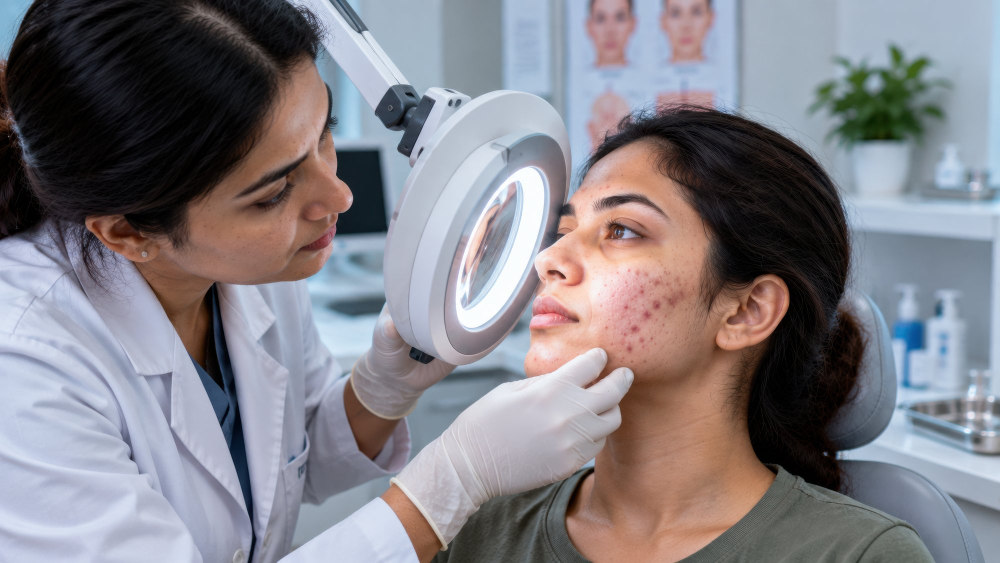
Eczema affects millions of adults. As per the CDC’s National Center for Health Statistics, 7.7% of U.S. adults had diagnosed eczema in 2024.
Steroid creams are a common treatment for eczema, but they are not the only option. Some people still have itching, inflammation, and recurring flare-ups despite using prescription creams and moisturizers.
Advances in dermatology have expanded the treatment options available for eczema. These include nonsteroidal prescription creams, biologic injections, oral medications, and light therapy.
Understanding these newer treatments can help adults with persistent eczema explore other ways to manage their symptoms.
Why Consider Eczema Treatments Beyond Steroid Creams?
Steroid creams have long been used to control eczema flare-ups, but they are not suitable for every patient. Consider other options when:
- Prolonged use of steroids increases the risk of side effects.
- Eczema affects sensitive areas, such as the face, eyelids, groin, or skin folds.
- Symptoms continue despite using the creams.
In such cases, patients should see their doctor for effective treatments. The choice depends on symptom severity, affected areas, medical history, and how you responded to earlier medications.
Nonsteroidal Creams for Eczema
Nonsteroidal prescription creams offer another way to manage skin inflammation. They work through different biological pathways than corticosteroids.
Newer options include the following.
1. Tapinarof Cream
Tapinarof (Vtama) is a nonsteroidal cream that activates the aryl hydrocarbon receptor (AhR). This receptor helps regulate skin inflammation and barrier function.
In the United States, tapinarof is FDA-approved for atopic dermatitis in adults and children aged 2 years and older. It is applied once daily. Possible side effects include folliculitis, headache, and upper respiratory tract infections.
2. Roflumilast Cream
Roflumilast (Zoryve) is a topical PDE4 inhibitor that helps reduce inflammatory activity in the skin.
The 0.15% cream is approved for mild to moderate atopic dermatitis in adults and children aged 6 years and older. It is generally applied once daily.
Possible side effects include headache, nausea, diarrhea, and discomfort at the application site.
3. Ruxolitinib Cream
Ruxolitinib (Opzelura) is a topical JAK inhibitor that blocks signals involved in skin inflammation and itching.
It is approved for short-term, non-continuous treatment of mild to moderate atopic dermatitis in eligible patients aged 2 years and older who are not immunocompromised. It is generally considered when other prescription topical treatments have not worked well enough or are not advisable.
Ruxolitinib cream carries important safety warnings. It is not intended for unrestricted or continuous use over large areas of skin.
4. Topical Calcineurin Inhibitors
Tacrolimus ointment and pimecrolimus cream are established nonsteroidal treatments. They reduce immune activity in the skin and are often considered for sensitive areas, such as the face, eyelids, and skin folds. Temporary burning or stinging can occur after application.
Biologic Injections for Moderate to Severe Eczema
Biologic medications target specific immune pathways involved in atopic dermatitis. They are generally prescribed for moderate to severe eczema.
| Medication | Brand Name | How It Works |
|---|---|---|
| Dupilumab | Dupixent | Blocks IL-4 and IL-13 signaling to reduce inflammation. |
| Tralokinumab | Adbry | Targets IL-13, a protein involved in skin inflammation. |
| Lebrikizumab | Ebglyss | Targets IL-13, a protein involved in skin inflammation. |
| Nemolizumab | Nemluvio | Blocks IL-31 receptor signaling, helping address eczema-related itching. |
These medications are injected under the skin, and some come in prefilled pens or syringes. Their dosing schedules and approved uses differ.
Oral Medications for Eczema
Some adults need treatment that works throughout the body, not only on the affected skin. Oral Janus kinase (JAK) inhibitors are an option for certain patients with moderate to severe atopic dermatitis.
Two medications in this category are:
- Upadacitinib (Rinvoq): A JAK inhibitor used for eligible adults and adolescents aged 12 years and older with refractory, moderate to severe atopic dermatitis.
- Abrocitinib (Cibinqo): A selective JAK1 inhibitor approved for eligible adults and adolescents aged 12 years and older with refractory, moderate to severe atopic dermatitis.
These medications can help reduce some symptoms. However, they may increase the risk of infections, blood clots, certain cancers, and cardiovascular events.
Before prescribing anything, doctors review your medical history and other risk factors. They may also recommend blood tests and ongoing monitoring during treatment.
Phototherapy: Another Eczema Treatment Option
Phototherapy uses controlled ultraviolet light to reduce skin inflammation. Narrowband UVB, with wavelengths around 311–313 nm, is one of the most common approaches for atopic dermatitis.
It may be recommended when eczema affects multiple areas or does not respond well to topical treatments.
Treatment typically involves several sessions each week over a period of weeks. Repeated UV exposure also carries long-term skin risks, so treatment requires medical supervision.
How to Choose the Right Eczema Treatment
No single treatment works for everyone. The right approach depends on several factors:
- Severity: Mild eczema may respond to topical treatments, while moderate to severe cases may require biologics or oral medications.
- Affected areas: Eczema on the face, eyelids, and skin folds may need different medications than eczema elsewhere on the body.
- Previous treatments: Your doctor considers whether earlier medications provided enough relief.
- Medical history: Existing conditions, current medications, and potential treatment risks all influence the choice.
- Treatment preferences: Some patients prefer creams, while others may consider injections or oral medications.
When Should You See a Doctor for Eczema Treatment?
Occasional dryness may improve with regular moisturizing. Recurring or worsening symptoms, however, need medical attention.
Consider seeing a doctor if you have:
- Frequent flare-ups despite following a treatment plan.
- Severe itching that affects your sleep or daily activities.
- Cracked, painful, or bleeding skin.
- Rashes that spread or become more inflamed.
- Possible signs of infection, such as pus, increasing pain, or fever.
Frequently Asked Questions
What are the newest treatments for eczema?
Newer options include tapinarof and roflumilast creams, biologics such as lebrikizumab and nemolizumab, and oral JAK inhibitors. These treatments may be appropriate for patients with persistent or moderate to severe atopic dermatitis.
What is the most effective eczema treatment for adults?
There is no single best treatment. Mild eczema may respond to moisturizers and prescription topical medications. Moderate to severe cases may require biologics, oral JAK inhibitors, or phototherapy.
Does the weather make eczema worse?
Yes. Cold, dry air can dry out and irritate the skin, while hot, humid weather can increase sweating and itching. Sudden temperature changes may also aggravate symptoms. Keeping your skin moisturized and avoiding known weather triggers can help manage flare-ups.
Can new eczema treatments cure the condition permanently?
There is currently no permanent cure for atopic dermatitis. Newer treatments can control inflammation, relieve itching, and reduce flare-ups. However, symptoms may return and require further evaluation and treatment.
How long does eczema last?
Eczema is a chronic skin condition that can last for years, with periods of flare-ups and improvement. Some people develop it in infancy, while others first have it as adults. Proper skin care and appropriate medications can help control symptoms and reduce flare-ups.
Explore Eczema Treatment Options at Vantage Medical Associates
Living with recurring eczema can be frustrating, especially when conventional treatments do not provide lasting relief. At Vantage Medical Associates, At Vantage Medical Associates, our primary care doctors can evaluate your eczema, review your treatment options, and refer you to a specialist when needed.
Schedule a visit to our multispecialty hospital in Brooklyn, Queens, Brentwood, West Hempstead, or Babylon.